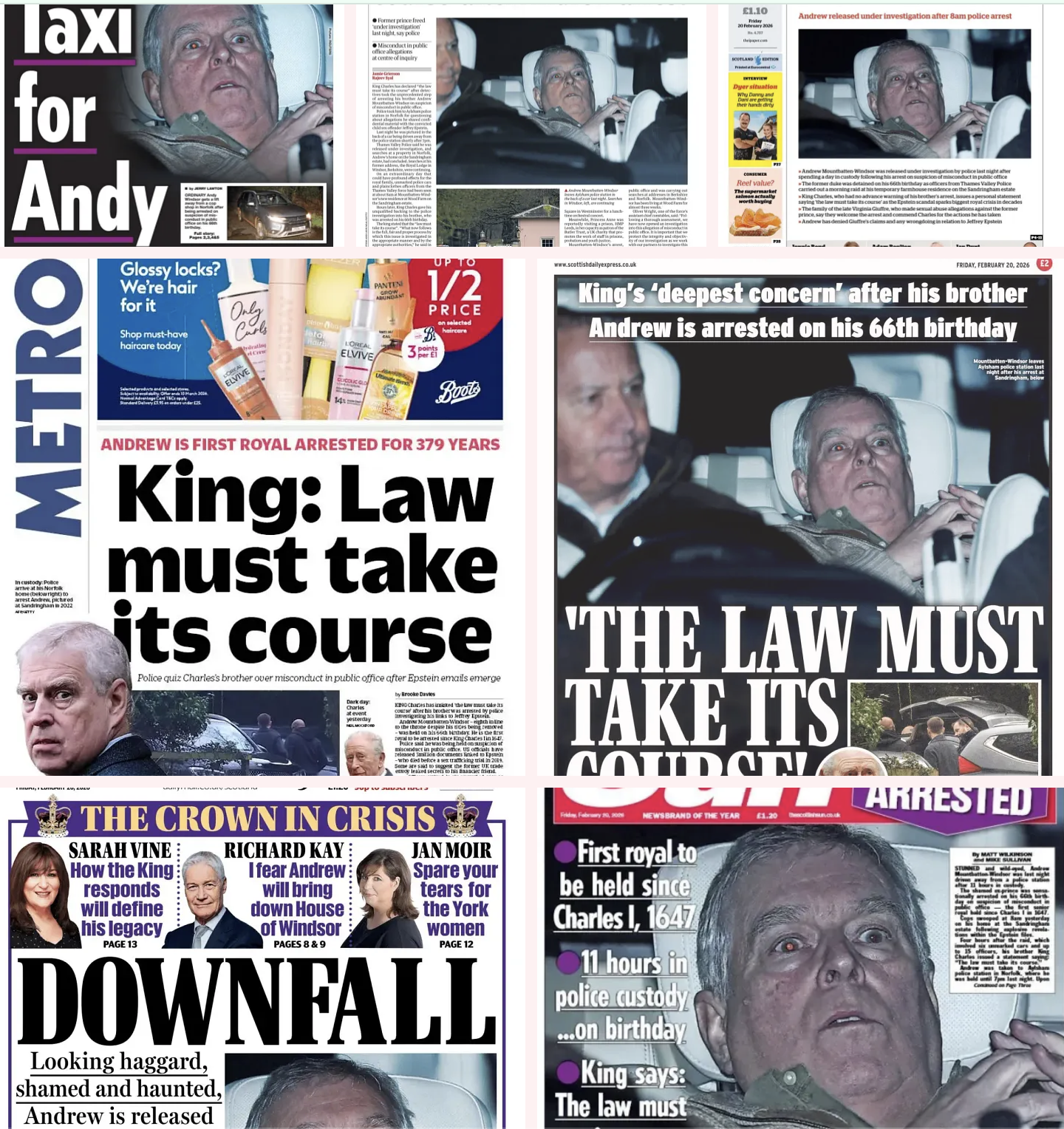
The morning after the night before… for Andrew Mountbatten-Windsor, in what might just be the most dramatic constitutional event in the UK since the execution of Charles I in 1649 – when I went for my morning newspaper and coffee I had a glance at the other Scottish papers, and it reveals much about the character and diversity of Scotland’s daily press.
The first thing that jumps out is how little the Scottish editions of UK-wide papers bother tailoring anything for a Scottish audience. The Sun, Times, Telegraph, Mail, Express, Guardian, FT, and Metro all simply copied their English front page and pasted it north of the border. No localisation, no regional angle, just the same story, the same headline, and the same layout. As far as they’re concerned, nothing uniquely Scottish needs saying.
But things get more interesting when you look at the six indigenous Scottish morning papers, each approaching the story in their own trademark fashion.
The Scotsman, published in Edinburgh, tries to emulate the stately seriousness of the London Times. It dedicates almost its entire front page to the story, leaving room only for a rugby flash and a political column. It clearly wants the moment to feel weighty and national, as if saying: this is the only thing anyone should be talking about today.
Over in Glasgow, The Herald takes a very different route. It leads with the story but frames the article with a black border, not to imply a death, but to signal significance. Around it, though, the page is crammed with other material: three separate Scottish stories, three feature flashes up top, and even a strip advert along the bottom.
Then there’s The National, the openly pro-independence paper, which does make the royal story the sole item on its front page – but very much on its own terms. The image they use is ceremonial, almost stiff, but the headline underneath questions rather than celebrates. It’s sceptical of the monarchy, but not in a way that feels alien to its readers. If anything, it taps into the questions a lot of Scots (both nationalists and unionists) might be quietly asking.
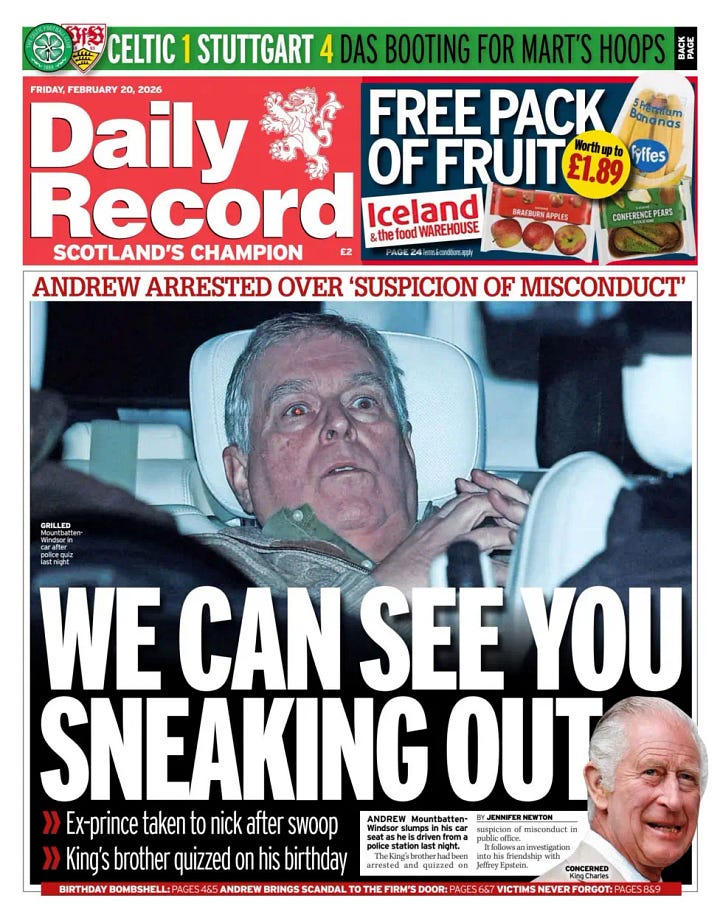
The Daily Record goes for the more populist, tabloid feel. It mirrors the Scottish Sun with words like “sneaking,” “nick,” “slump,” and “birthday bombshell,” though its execution isn’t quite as snappy. True to form, it also has to squeeze in Celtic’s European result, because that’s simply what Record readers expect.
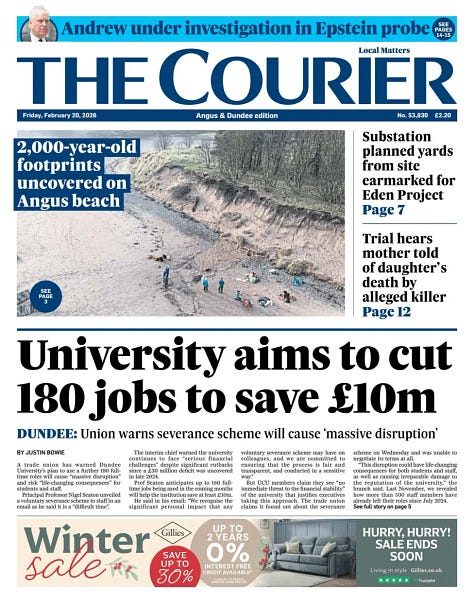
Meanwhile, the Courier in Dundee and the Press & Journal in Aberdeen keep a noticeable distance from the royal drama. For both, it’s just a small flash at the top “see pages 14–15” with the real front-page real estate given to stories that matter more to their patch. It’s a reminder that for readers in Tayside and the North-East, London scandals don’t necessarily eclipse local concerns. Whilst, their tabloid counterparts, The Evening Telegraph and The Evening Express, don’t even mention the story at all on their front pages.
What is a good reminder about Scottish journalism is it’s far from monolithic: it is regional, partisan, pragmatic, and proudly distinctive. And in moments of this constitutional upheaval, these differences don’t disappear. They become even more visible. In the end, however, the Scottish press handled the royal chaos as usual: ranging from full national drama to complete indifference, as if deciding whether an ex-prince being nicked mattered more or less than last night’s football score.